
Notes from January
A review and analysis of Dostoyevsky's Notes from Underground

January has come again, and with it the inevitable onslaught of feelings that mimic the violence of the atmosphere around it. Gray, numb, oppressive, stifling, generally painful, and no matter if you enjoy this temperament or not, it forces upon the individual a strange veil of pessimism. I, for one, love the winter. I have said this for my entire adult life. However, despite this love for the cold, the snow, and the general silence that this season sweeps in, I can’t help but become violently depressed. Every year this occurs, and always to the extent that I am nearly non-functional. I crumble like a castle made of sugar. I deteriorate so fully, and for what? I really am enjoying the season! This seems to make no difference, as the existential dread creeps up like a viper and snatches all joyful sensations away. It’s almost unavoidable at this point. All roadblocks, all treatments have been useless, so I accept that three (maybe four) months out of the year I will want to die and have no hope for the future. I am a slack pile of limbs that goes on through sheer momentum. I am banished to the underground, and I suppose I have no option but to accept this? (Or move to Miami).
In the spirit of mental disintegration, I chose to read one of my favorite Dostoyevsky pieces, Notes From Underground. What a strange, lovely little book this is! I remember the first time I read this work, it was also in January, four years ago. The narrative is relayed from a troubled, contradictory, self-effacing, yet vain driven individual, who promises these notes are not for a viewer, but rather a form of self-punishment. The first part is an ideological treatise on the underground man, and the ideas that encapsulate this phrase: interiority, suffering, and consciousness. The second part is a recollection of memories that depict these sensations, those of shame, suffering, and an inability to live in the exterior world. In this two part system, he reveals the state of his interior: deeply contradictory, sensitive to the point of neurosis, and in a way, a pitiful result of a psyche which is simply at odds with the world around it.
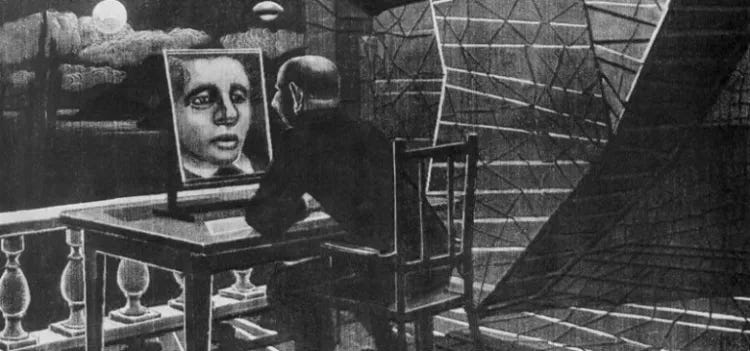
My first experience with this text had me aghast. How could this Russian man from the 1800s recollect my own sentiments in such a poignant way? I was twenty-two and my own depression at the time was catastrophic, unlike now, where it is a sedate curmudgeonly little man who is content to just follow me around. At that time, he had a malicious vengeance against his host. Well in this state, I truly felt Dostoevsky was mirroring thoughts and sentiments from my very mind. There is something deeply resonant to the troubled individual, to the individual who is trapped to a certain extent in their own minds, which as we come to see is the underground.
The root of the underground man’s ailments is his very consciousness. In the first part of his Notes, our narrator declares: “not only excess of consciousness, but any consciousness at all is a disease” (5). This is because he is unable to accept reality for what it is, and he is, as a product, entrapped by the lure of thoughts. He is able to dream. The greatest threat to the laws that govern reality is he who can desire that which he has not seen, and consciousness births this with the ability to discern that reality is not all there is. Such an individual is then tormented by an existence that he also can’t seem to engage in, as this consciousness renders all action a bit superfluous. It is through this very dissatisfaction that enlightenment is reached, as our narrator believes that “suffering is the sole root of consciousness” (34). Through consciousness there is a split, a render in the psyche between action and thoughts, dreams and reality, life and fantasy.
The underground man, having attained consciousness, finds dissatisfaction with the reality that pales in comparison to the dream, and is thus alienated. “The more aware I was of goodness and of everything ‘lofty and beautiful,’ the deeper I sank into my slime” (5). The underground man lives through dreams. He is nourished and sustained by the only world he can stomach: the one he has invented in his head. A life more noble and satisfying than the “real” world ever could have been. “I know clearly…it’s not at all the underground which is best, but something different, something altogether different, something I long for and can never find!” (37). The paradoxalist is morbidly aware of his own contradictions, yet he cannot accept them. He seeks utopia; meaning the good place, and simultaneously the place that cannot be. Is this not the case for most of us? We desire something beyond what we have, but what? We can only feel a longing for this unknown that, most likely, could never be. Is this not the root of most of our sufferings? The dream that will, and can never, be realized. Well, for our underground man, he is unable to accept this, and so “I invented a life for myself, so at least I’d live somehow” (16).
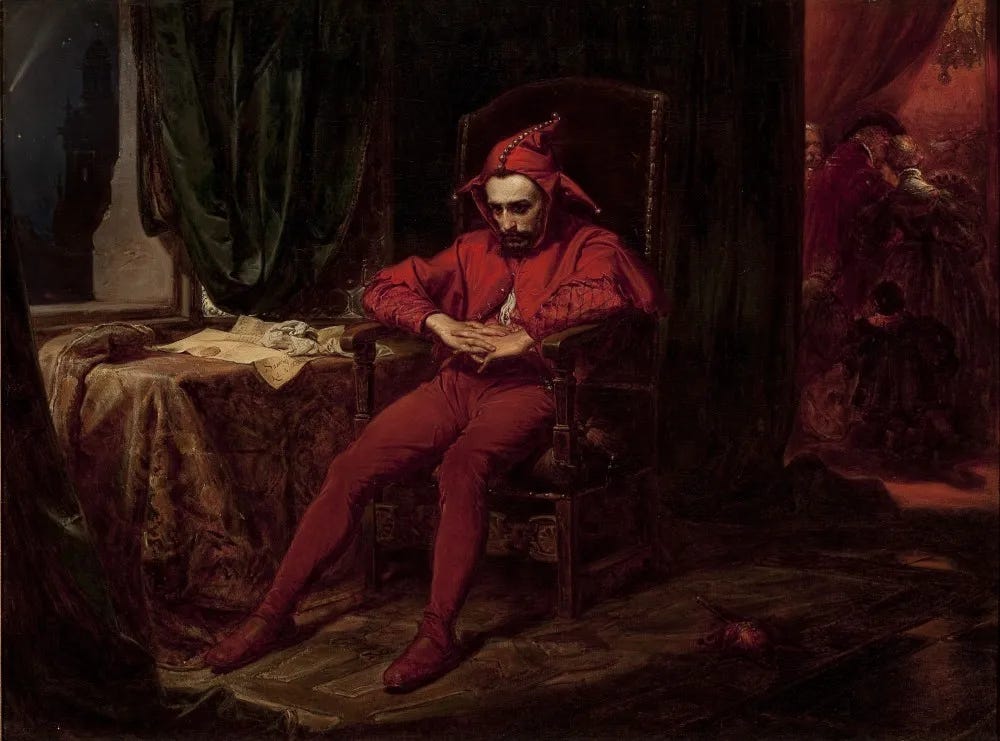
He digresses to an analysis of man’s driving force in life, and it is to assert his will. “All of man’s purpose, it seems to me, really consists of nothing but proving to himself every moment that he is a man and not an organ stop” (31). The larger message of this being: man will not act in his self interest, but rather in the way that expresses his freedom of will, his ability to choose, to assert his freedom. Interestingly, the underground man is inhibited from doing this because he is a slave to his own consciousness, and is thus “forever fearful of action” (48). He desires action deeply, the ability to assert his will, and consequently be a man. However, we see this fail throughout the second part. When he seeks to take action, to assert his will, when he sees “I am now facing reality” (68), he shatters, left “ignored by everyone, crushed, and annihilated” (75). It is only in the climax that he is ,to some extent, able to act. However, this, we see, is to his ultimate demise. He is left questioning: “which is better– cheap happiness, or noble suffering? Well, which is better? (128).
Notes makes us question what the purpose of our being is, and in what capacity can we say we have lived a true authentic life? What does it mean to be a human: to assert our will or to have a pure heart? Is love or power the defining feature of humanity? We see these questions played out in the arena of the underground man’s psyche. Well, where he ends up may answer some of these questions.
My take away is that the purpose for which we are here, the driving factor of man is not to assert his will. No, rather it is to have a human connection with other beings. The underground man asserts that man wants consciousness above all, but his actions and the resulting sentiments disprove this. It shows that man wants ultimately the purest human connection: love. He even says “you cannot have a full, genuine consciousness without a pure heart,” and what is a pure heart but one that loves and is capable of being loved? In the conclusion the underground man asserts his free will; he banishes the loved object. And in this he realizes that is not what he wanted, not what he desires, not what would save him nor give his life meaning, give him humanity; no rather, it was love. “Love means all of resurrection, all of salvation from any kind of ruin, all of renewal of life” (126). And so he runs after it, and in not retrieving it he is doomed forever to an underground existence, which we come to see isn’t consciousness at all.
I looooove your writing style it’s inspired me so much
Well said! I think the ability to assert our will / that we exist and have the right to exist is what differentiates humans from other animals. But I agree, I don’t think it’s our overall purpose (maybe as a species to procreate,on an individual level we each have our own purpose to drive humanity forward).